Blog
- June 30, 2026
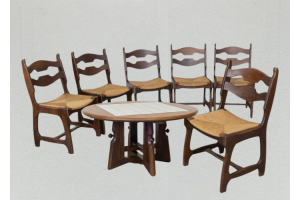
Among the most celebrated names in postwar French design, Guillerme and Chambron created furniture that continues to captivate collectors for its warmth, craftsmanship, and unmistakable character. Working throughout the 1950s and 1960s, the duo developed a distinctly French interpretation of modernism—one that favored solid oak, sculptural forms, and traditional joinery over the sleek industrial materials...
Among the most celebrated names in postwar French design, Guillerme and Chambron created furniture that continues to captivate collectors for its warmth, craftsmanship, and unmistakable character. Working throughout the 1950s and 1960s, the duo developed a distinctly French interpretation of modernism—one that favored solid oak, sculptural forms, and traditional joinery over the sleek industrial materials that defined much of the era.
A Creative Partnership
Robert Guillerme and Jacques Chambron met after the Second World War and established a partnership that would shape the landscape of French furniture design. Together with the manufacturer Votre Maison, they produced collections that balanced...
- June 01, 2026
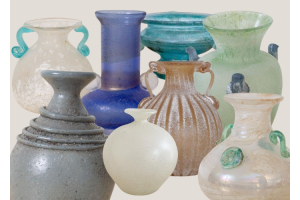
Few decorative techniques capture the beauty of age quite like scavo. Named after the Italian word for "excavation," the technique is designed to recreate the weathered appearance of ancient vessels uncovered from archaeological sites. The result is a finish that feels rich with history while remaining distinctly Italian in its craftsmanship.
What is Scavo?
Scavo is a decorative technique used primarily on...
Few decorative techniques capture the beauty of age quite like scavo. Named after the Italian word for "excavation," the technique is designed to recreate the weathered appearance of ancient vessels uncovered from archaeological sites. The result is a finish that feels rich with history while remaining distinctly Italian in its craftsmanship.
What is Scavo?
Scavo is a decorative technique used primarily on ceramics and glass to mimic the effects of natural aging. Through specialized glazes, mineral treatments, and firing processes, artisans create surfaces that appear softened by time, often featuring subtle variations in color, texture, and patina.
The finished pieces often resemble objects...
- May 04, 2026
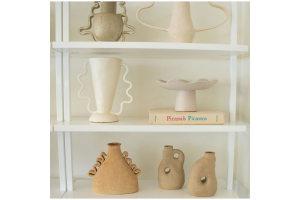
We’ve always believed that the most compelling pieces in a space carry a sense of authorship—an imprint of the hand that made them and the place they come from. That’s why we seek out and work with small ceramic artists from around the world, whose practices are often rooted in local traditions yet feel entirely individual. These are objects made slowly and intentionally, where variation, texture, and subtle...
We’ve always believed that the most compelling pieces in a space carry a sense of authorship—an imprint of the hand that made them and the place they come from. That’s why we seek out and work with small ceramic artists from around the world, whose practices are often rooted in local traditions yet feel entirely individual. These are objects made slowly and intentionally, where variation, texture, and subtle imperfection are part of the story rather than something to be refined away. Bringing these works into the shop is less about following trends and more about supporting distinct voices, preserving craft, and offering pieces that feel personal, considered, and quietly special within a home...
- April 04, 2026
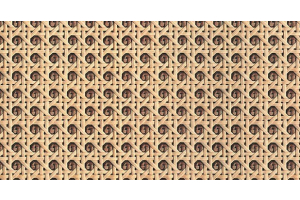
Rattan has long occupied a unique place in the world of furniture and interiors—at once informal and refined, lightweight yet enduring. Woven into the fabric of 20th-century European design, it offered an alternative to heavier materials, introducing a sense of ease and movement into interiors. Its appeal lies not only in its natural texture, but in the way it balances craftsmanship with simplicity—never...
Rattan has long occupied a unique place in the world of furniture and interiors—at once informal and refined, lightweight yet enduring. Woven into the fabric of 20th-century European design, it offered an alternative to heavier materials, introducing a sense of ease and movement into interiors. Its appeal lies not only in its natural texture, but in the way it balances craftsmanship with simplicity—never overpowering a space, but always adding depth.
What Is Rattan?
Rattan is a naturally renewable palm that grows in tropical regions, primarily in Southeast Asia. Unlike solid wood, it is both flexible and strong, allowing it to be bent, shaped, and woven into a wide range of forms. This versatility...
- March 02, 2026
Emerging in the years between the First and Second World Wars, the Art Deco movement marked a turning point in how design was conceived, produced, and experienced across Europe. Rooted in a desire to break from tradition while still honoring craftsmanship, it introduced a new visual language defined by geometry, balance, and material richness. Nowhere was this more fully realized than in Paris, where designers...
Emerging in the years between the First and Second World Wars, the Art Deco movement marked a turning point in how design was conceived, produced, and experienced across Europe. Rooted in a desire to break from tradition while still honoring craftsmanship, it introduced a new visual language defined by geometry, balance, and material richness. Nowhere was this more fully realized than in Paris, where designers and makers began to explore a refined modernism—one that felt both progressive and deeply considered. Across France and Western Europe, Art Deco became synonymous with a certain kind of quiet luxury: interiors that were structured yet expressive, decorative but never excessive. It reflected...
- February 10, 2026
Gustave Reynaud’s ceramics occupy a distinctive place within mid-century French design — quietly confident, materially rich, and enduringly relevant. His work is defined not by excess or ornament, but by balance: proportion held in tension with surface, structure softened by glaze. Decades later, his vessels continue to resonate for their sculptural presence and restrained beauty, embodying a philosophy of...
Gustave Reynaud’s ceramics occupy a distinctive place within mid-century French design — quietly confident, materially rich, and enduringly relevant. His work is defined not by excess or ornament, but by balance: proportion held in tension with surface, structure softened by glaze. Decades later, his vessels continue to resonate for their sculptural presence and restrained beauty, embodying a philosophy of craft that feels both grounded and timeless.
A Life in Clay
Gustave Reynaud (1915–1972) was a French ceramicist whose work reflects the disciplined elegance of mid-century studio pottery. Working during a period of renewed interest in artisanal craft, Reynaud devoted himself to refining traditional...
- January 04, 2026
Few objects capture light with the same poetry as Murano glass. At once delicate and assured, these pieces are the result of centuries of experimentation, restraint, and mastery—crafted on a small cluster of islands in the Venetian lagoon, where glassmaking became both an art form and a guarded legacy.
An Island Devoted to Craft
Murano’s rise as a glassmaking center dates to the late 13th century, when Venetian...
Few objects capture light with the same poetry as Murano glass. At once delicate and assured, these pieces are the result of centuries of experimentation, restraint, and mastery—crafted on a small cluster of islands in the Venetian lagoon, where glassmaking became both an art form and a guarded legacy.
An Island Devoted to Craft
Murano’s rise as a glassmaking center dates to the late 13th century, when Venetian authorities moved furnaces from the city to the islands to reduce the risk of fire and to protect closely held techniques. What followed was an extraordinary concentration of knowledge. Glassmakers refined their methods over generations, developing innovations that would influence decorative...
- November 30, 2025
In the flourishing design landscape of early 20th-century France, few creative partnerships captured the spirit of accessible, artisanal modernism as gracefully as Adrien Audoux and Frida Minet. Working primarily in the 1940s and 1950s, the duo—best known simply as Audoux-Minet—championed an aesthetic rooted in craftsmanship, honest materials, and a distinctly Mediterranean sensibility. Today, their work...
In the flourishing design landscape of early 20th-century France, few creative partnerships captured the spirit of accessible, artisanal modernism as gracefully as Adrien Audoux and Frida Minet. Working primarily in the 1940s and 1950s, the duo—best known simply as Audoux-Minet—championed an aesthetic rooted in craftsmanship, honest materials, and a distinctly Mediterranean sensibility. Today, their work remains a coveted cornerstone of French modernist design, valued for its understated elegance and tactile warmth.
A Vision Grounded in Craft
Based in the coastal town of Golfe-Juan, Audoux-Minet developed a clear philosophy: beautiful furniture should be made by hand, accessible in spirit...
- November 11, 2025
In the world of French design, few materials carry the same timeless power as iron. From the sweeping balconies of Paris to the sculptural bases of Art Deco tables, ironwork reflects a balance of artistry, endurance, and refinement. At Panoplie, our collection of French iron furniture and décor celebrates this enduring tradition — where craftsmanship meets architectural beauty.
A French Tradition in Metal...
In the world of French design, few materials carry the same timeless power as iron. From the sweeping balconies of Paris to the sculptural bases of Art Deco tables, ironwork reflects a balance of artistry, endurance, and refinement. At Panoplie, our collection of French iron furniture and décor celebrates this enduring tradition — where craftsmanship meets architectural beauty.
A French Tradition in Metal
France’s legacy of ironwork stretches back centuries — from ornate 18th-century gates and balconies to the minimalist wrought-iron forms of the 1920s and 30s. During the Art Deco era, iron was reimagined as a luxury material: sleek, geometric, and structural.
Designers like Raymond Subes and...
- October 13, 2025
Before modern minimalism found its way into today’s homes and landscapes, Swiss designer Willy Guhl was already transforming humble cement into works of enduring art. Our curated collection of his iconic planters showcases not only functional vessels for greenery, but sculptural objects that embody timeless mid-century modern design.
A Glimpse into a Singular Vision
Willy Guhl (1915–2004) was a pioneer of...
Before modern minimalism found its way into today’s homes and landscapes, Swiss designer Willy Guhl was already transforming humble cement into works of enduring art. Our curated collection of his iconic planters showcases not only functional vessels for greenery, but sculptural objects that embody timeless mid-century modern design.
A Glimpse into a Singular Vision
Willy Guhl (1915–2004) was a pioneer of Swiss modernism and a celebrated teacher at the Zurich School of Applied Arts. Known for his philosophy of “achieving the most with the minimum,” Guhl brought clarity and calm to every object he created.
His favored medium, Eternit—an innovative fiber-cement blend—was revolutionary in its...